This was a 3-month crash course in product design, market validation, and knowing when to walk away.
Phase 1: Research and Pain Point Definition (Week 1–2) — Studied Upwork (high fees, no team projects), Fiverr (gig-based, not project-based), Toptal (elite only, expensive), Behance (can’t hire directly), LinkedIn (full-time jobs, not freelance). Key insight: every platform solves one problem well, but no one solves all of them in one place.
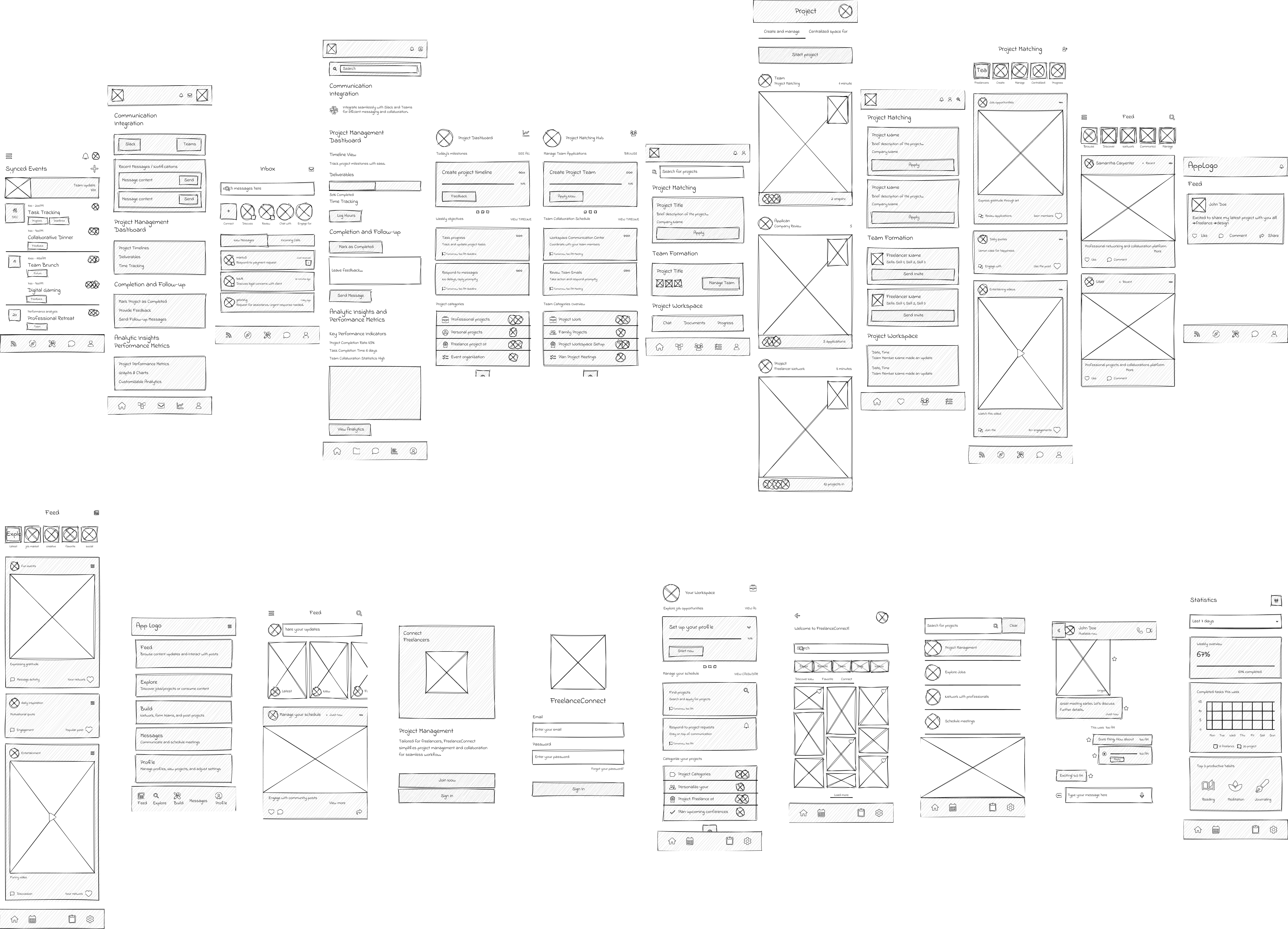
Phase 2: Wireframing (Week 3–4) — Designed 20+ screens across 2 modes. BTO (Before the Order): job posting, applications, portfolio browsing, networking. ATO (After the Order): project management, task tracking, deliverables, payments.
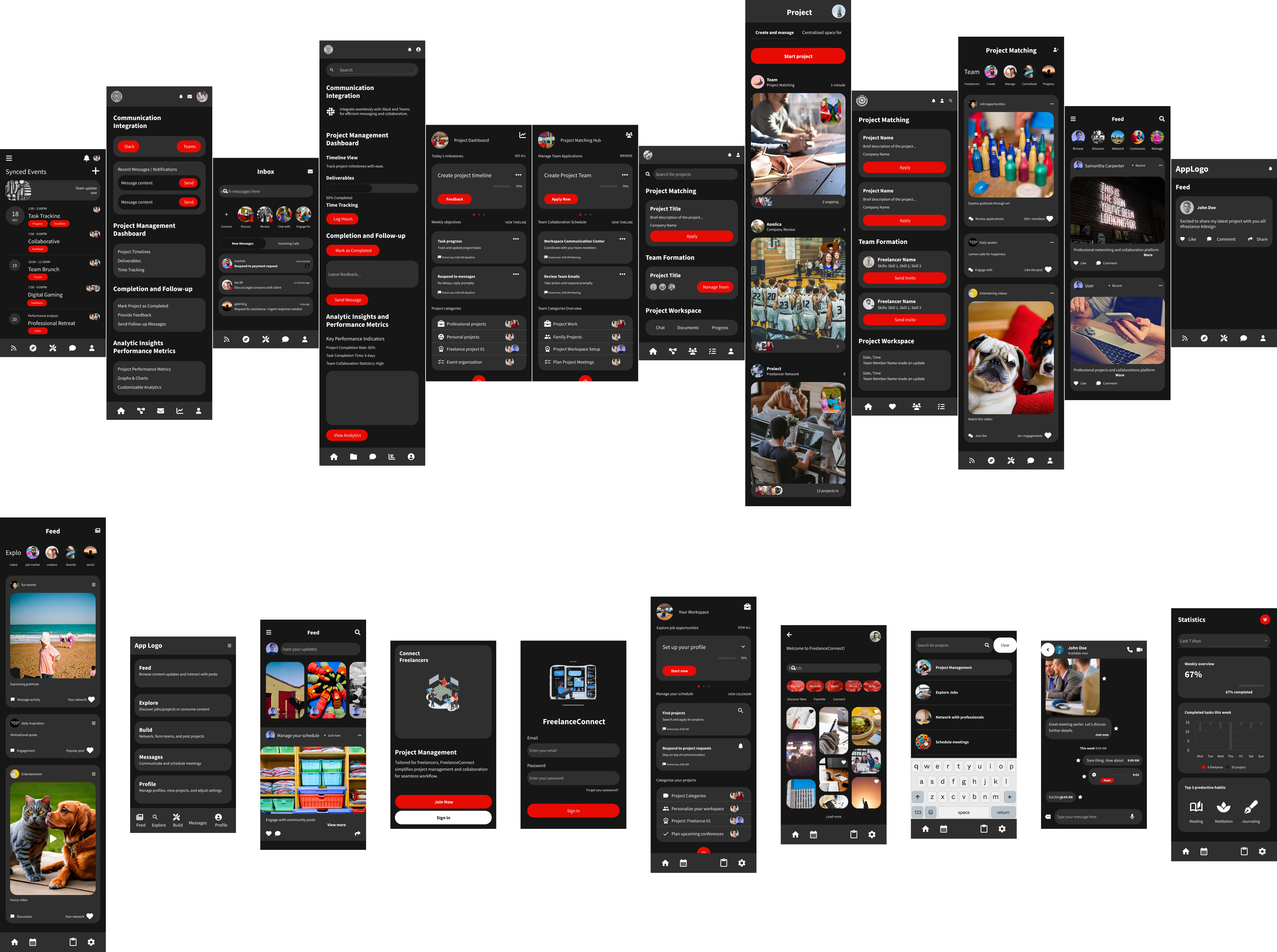
Phase 3: High-Fidelity UI Design (Week 5–8) — Used AI design tools (v0, Uizard, Galileo AI): input wireframes → AI generates high-fidelity UI → refine. Cut design time from 4 weeks to 2 weeks.
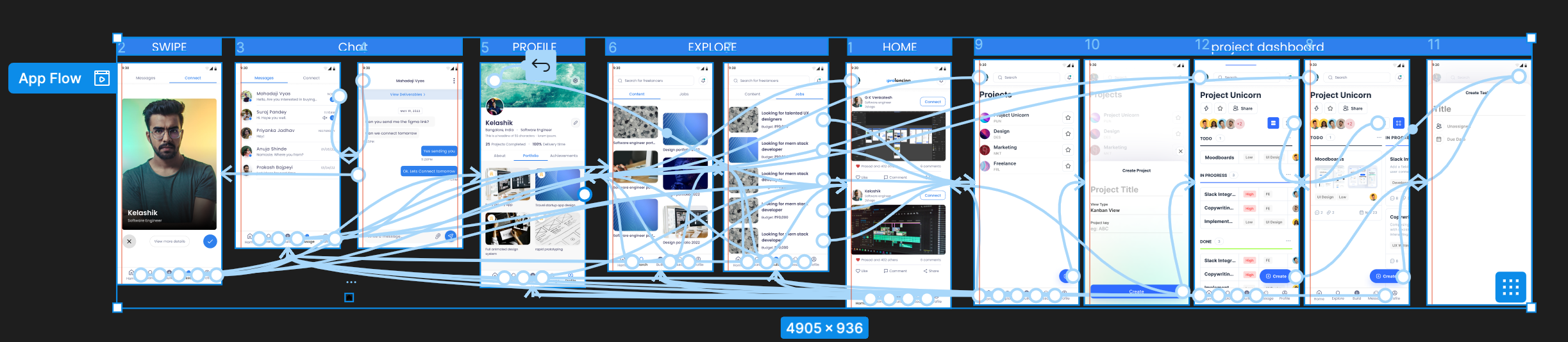
Phase 4: Mobile App Prototype (Week 9–10) — Built a fully interactive Figma prototype covering onboarding, profile creation, portfolio browsing, job applications, project dashboard, and AI task suggestions.
Phase 5: Landing Page (Week 11) — Designed a pitch deck-ready landing page to explain the product and attract beta users.
Phase 6: Validation and Reality Check (Week 12) — Talked to 50+ freelancers and 20+ clients. Feedback: freelancers loved the features but wouldn’t switch without active clients. Clients were skeptical (“Why trust a new platform when Upwork already works?”). The cold start problem: freelancers won’t join without clients, clients won’t join without freelancers, and couldn’t afford paid ads to kickstart both sides.
Phase 7: Decision to Shut Down (End of Month 3) — Distribution matters more than features. Marketplaces need capital to subsidize one side until the network effect kicks in. Shut it down and joined Freightify.